Showing posts with label Paul Young. Show all posts

Friday, October 28, 1988

Mike + the Mechanics Living Years released

Living Years

Mike + the Mechanics


Released: October 28, 1988


Peak: 13 US, 2 UK, 12 CN, 10 AU


Sales (in millions): .05 US, 0.1 UK


Genre: mainstream rock


Tracks:

Song Title (Writers) [time] (date of single release, chart peaks) Click for codes to singles charts.

  1. Nobody’s Perfect (Rutherford, B.A. Robertson) [4:48] v: Young (11/5/88, 63 US, 58 CB, 3 AR, 29 AU)
  2. The Living Years (Rutherford, Robertson) [5:32] v: Carrack (12/31/88, 1 US, 1 CB, 2 RR, 1 AC, 5 AR, 2 UK, 1 CN, 1 AU)
  3. Seeing Is Believing (Rutherford, Robertson) [3:13] v: Young (4/8/89, 62 US, 53 CB, 18 AR, 46 CN, 91 AU)
  4. Nobody Knows [4:24] v: Carrack (7/22/89, 41 AC)
  5. Poor Boy Down [4:33] v: Young
  6. Blame [5:24] v: Young
  7. Don’t [5:45] v: Carrack
  8. Black & Blue (Rutherford, Robertson, Young) [3:27] v: Young
  9. Beautiful Day (Rutherford, Neil, Young) [3:39] v: Young
  10. Why Me? (Rutherford, Robertson) [6:26] v: Carrack

Songs are written by Mike Rutherford and Christopher Neil unless noted otherwise. V indicates who sang lead vocals.


Total Running Time: 47:11


The Players:

  • Mike Rutherford (guitar, bass)
  • Paul Carrack (vocals)
  • Paul Young (vocals)
  • Adrian Lee (keyboards)
  • Peter Van Hooke (drums)

Rating:

3.730 out of 5.00 (average of 12 ratings)


Awards: (Click on award to learn more).

About the Album:

After the enormous success of Genesis’ Invisible Touch in 1986, Mike Rutherford returned to his side project, Mike + the Mechanics, for a second album. It didn’t seem likely that he’d find the same magic again. After all, that first album surprised people by landing two top-10 hits.

Instead, Rutherford and crew topped themselves, going all the way to #1 on the Billboard Hot 100 with the title cut. Rutherford and co-writer B.A. Robertson had both lost their fathers recently. However, the lyrics were solely by Robinson, whose son was born three months after his death. Paul Carrack, who tackled lead vocals on the track, lost his father when he was eleven years old. WK

The song was Carrack’s fourth trip to the top 10. He’d previously been there with Mike + the Mechanics when he sang lead on “Silent Running” and had also hit the top 10 back in 1974 with Ace and the song “How Long.” After his profile was upped with “Silent Running,” he also found top-10 success with his own solo hit “Don’t Shed a Tear” in early 1988.

“On mid-tempo tracks with Rutherford’s trademark bubbly bass such as Nobody’s Perfect and Beautiful Day and on the infectious Poor Boy Down the group display a soulfulness that many in the genre lack even while there is a distinct lack of individuality present in their musicianship.” AMG

Overall, the album “moves smoothly between anthemic ballads such as the title track and more up-beat numbers such as Seeing Is Believing. The band even shows a trace of Mike Rutherford’s prog rock roots with Genesis on the epic-like Why Me?” AMG It didn’t find quite the success of its predecessor, though. “Nobody’s Perfect” and “Seeing Is Believing” both fell far short of the top 40, although the former reached #3 on the album rock chart and the latter got to #18.

“When the group try their hands at funk, as on Don’t, or harder rock, as on Black and Blue, they sound quite out of their element.” AMG The latter did have the credentials of Rutherford’s Genesis bandmates Phil Collins and Tony Banks behind it, though. It used a sample from a riff they played during sessions for the Invisible Touch album. WK

Resources and Related Links:


Other Related DMDB Pages:


First posted 1/17/2009; last updated 9/1/2021.

Monday, November 4, 1985

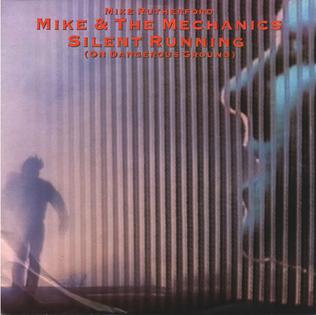
Mike + the Mechanics “Silent Running” released

Silent Running (On Dangerous Ground)

Mike + the Mechanics

Writer(s): Mike Rutherford, B.A. Robertson (see lyrics here)


Released: November 4, 1985


First Charted: November 9, 1985


Peak: 6 US, 5 CB, 5 GR, 5 RR, 7 AC, 15 AR, 21 UK, 8 CN, 23 AU, 2 DF (Click for codes to charts.)


Sales (in millions): --


Airplay/Streaming (in millions): -- radio, 10.9 video, 13.81 streaming

Awards:

Click on award for more details.

About the Song:

Bassist/guitarist Mike Rutherford was a founding member of the British rock band Genesis in 1967. He stayed with the band throughout their history, watching them move from their artsier, progressive side with Peter Gabriel on vocals to their more commercial style with Phil Collins at the helm. In the early 1980s, Rutherford released two solo albums. The most successful song from either effort was “Maxine,” a #39 album rock hit in 1982.

At the same time, Genesis was reaching its commercial peak. Their self-titled 1983 release was the group’s third straight of five consecutive chart-toppers in the UK and second of four consecutive top-10 albums in the U.S. “That’s All,” from 1983, became the group’s first top-10 hit in the United States, preceding five top-5 hits from their 1986 Invisible Touch album.

In between the two Genesis albums, Rutherford formed a side project, Mike + the Mechanics. The group featured Paul Carrack and Paul Young on vocals, Adrian Lee on keyboards, and Peter Van Hooke on drums. Their 1985 self-titled debut produced two top-10 hits, “Silent Running” and “All I Need Is a Miracle.” Carrack, who’d previously taken the mike for hits like Ace’s “How Long,” Squeeze’s “Tempted,” and his own “I Need You,” sang lead on “Silent Running.”

Rutherford explained that the song, which he wrote with Scottish musician B.A. Robertson, was about “time travel. The story is about the idea that this father of this family is ahead in time, so he can look back and see what’s going to happen…He’s trying to get a message back to his family to warn them that impending disaster is coming. Hence the line, ‘Can you hear me, can you hear me calling you?” SF According to Casey Kasem’s American Top 40, he titled it after the 1972 sci-fi movie Silent Running because he thought the song had a spacey feel to it, WK although he also told Songfacts.com he hadn’t heard of the movie before writing the song. SF

The song was given the subtite “On Dangerous Ground” after it was chosen to be featured in the 1986 movie of the same name, although the movie was retitled Choke Canyon in the United States. WK The video featured clips from the movie. The BBC banned the song during the Gulf War because of its message regarding war, nationalism, and religion, including a direct reference to weaponry (“There s a gun and ammunition / Just inside the doorway.”). WK


Resources:


Related Links:


First posted 11/19/2022; last updated 12/28/2022.

Saturday, October 5, 1985

Mike + the Mechanics released self-titled debut

Mike + the Mechanics

Mike + the Mechanics


Released: October 5, 1985


Peak: 26 US, 78 UK, 10 CN, 36 AU


Sales (in millions): 0.5 US


Genre: mainstream rock


Tracks:

Song Title (Writers) [time] (date of single release, chart peaks) Click for codes to singles charts.

  1. Silent Running (On Dangerous Ground) (Rutherford, B.A. Robertson) [6:10] v: Carrack (11/9/85, 6 US, 5 CB, 5 RR, 6 US, 1 AR, 21 UK, 8 CN, 23 AU)
  2. All I Need Is a Miracle [4:10] v: Young (2/1/86, 5 US, 9 CB, 3 RR, 6 AR, 27 UK, 10 CN, 6 AU)
  3. Par Avion [3:36]
  4. Hanging by a Thread (Rutherford, Neil, Robertson) [4:40] v: Young
  5. I Get the Feeling [4:27] v: Carrack
  6. Take the Reins (Rutherford, Neil, Robertson) [4:18] v: Young
  7. You Are the One [3:41]
  8. A Call to Arms (Tony Banks, Phil Collins, Rutherford, Neil, Robertson) [4:38] v: Carrack, Young
  9. Taken In [4:17] v: Young (6/28/86, 32 US, 30 CB, 22 RR, 39 CN)

Songs by Mike Rutherford and Christopher Neil unless noted otherwise.


Total Running Time: 39:57


The Players:

  • Mike Rutherford (guitar, bass)
  • Paul Carrack (vocals)
  • Paul Young (vocals)
  • Adrian Lee (keyboards)
  • Peter Van Hooke (drums)

Rating:

3.776 out of 5.00 (average of 12 ratings)


Awards: (Click on award to learn more).

About the Album:

Mike Rutherford had been the bassist for British prog-rock group Genesis since its formation in 1967. In 1980, he branched out with his first solo album, Smallcreep’s Day and followed it with Acting Very Strange in 1982. The albums reached #13 and 23 in the UK respectively, but neither made much noise in the United States, peaking at #163 and 145 respectively.

It was hard to know what to expect from Rutherford’s side project, Mike + the Mechanics, in 1985. Genesis was coming off the success of its second consecutive top-10, multi-platinum album in the United States and the most successful single of their career thus far with “That’s All” (#4). Still, Rutherford hadn’t exactly proven himself as a chart juggernaut outside of Genesis. It was hard not to assume this would only be a one-off vanity project.

Instead, Mike + the Mechanics surprised the pop and rock worlds “with the somber stir of Silent Running, the album’s first release.” AMG The song reached #1 on the album rock chart and #6 on the Billboard Hot 100. The song also put Paul Carrack in the unique position of having provided lead vocals to successful songs for three different groups. Ace reached #3 with their 1974 song “How Long” and Squeeze had a new-wave classic with “Tempted” in 1981. He’d also reached the top 40 on his own with “I Need You” in 1982. “Carrack sounds just as sharp as he did with Ace or Squeeze throughout” AMG the album.

Paul Young, the other lead singer for the Mechanics had previously charted in the UK with his band Sad CafĂ©, most notably the #3 hit “Every Day Hurts” in 1979. He was fairly unknown in the United States, however. None of that prevented Mike + the Mechanics from breaking the one-hit wonder curse with second single All I Need Is a Miracle. With “its Genesis-like tempo and polished chorus,” AMG the song bettered “Silent Running” on the pop charts, hitting #5 and gave Rutherford & Co. another top-10 hit on the album rock chart.

Taken In, “a simple ballad that’s bettered by Paul Young’s genuine emotional charm,” AMG made the top 40 on the Billboard Hot 100 and was a top-10 adult contemporary hit. Par Avion wasn’t a single, but did get noticed because it was featured in the Miami Vice episode “Yankee Dollar.” WK

A Call to Arms was an unfinished Genesis song. It emerged out of the sessions for the band’s self-titled 1983 album, but Rutherford’s bandmates didn’t like it. Rutherford got their permission to use it and developed it into a full song with help from Neil and B.A. Robertson. WK

“The songwriting comes out on top before anything else.” AMG Rutherford presented demo tapes, sometimes with nothing more “than isolated riffs and fragments” WK to producer Christopher Neil who pinpointed which he considered worthy of more development. Rutherford then built them into “full-fledged songs.” WK His “guitar work isn’t overwhelming, both his six-string and bass guitar contributions complete a sound foundation for the vocals.” AMG

“Rutherford’s overseeing of the entire project is apparent” AMG but it benefits from “all of its members exercising their expertise.” AMG In addition to the two accomplished vocalists, “the mood setting drum work of Peter Van Hooke and the keyboard fills from Adrian Lee play a large part in setting the album’s tone, and add some pop zest to the majority of the tracks.” AMG

Resources and Related Links:


Other Related DMDB Pages:


First posted 1/17/2009; last updated 9/1/2021.