


 | Aural Fixation:Today’s Music Doesn’t Suck. You’re Just Lazy. |
 |
“Aural Fixation” is a music-themed column I wrote for PopMatters.com from 2011-2013. They are no longer online there, but I have reformatted them here at the DMDB blog with additional videos, photos, and links, such as where to buy referenced albums. I have also used the title “Aural Fixation” for any essays I have written outside of PopMatters.com as well. To see the essays, check out the Dave’s Music Database Aural Fixation page.
The essays from PopMatters.com have been gathered in book form as Aural Fixation: Essays from a Music Obsessive. Essays written from 2009 to 2011 have been gathered in the book No One Needs 21 Versions of “Purple Haze”. You can purchase the essays in book format here. |
Nothing screams, “I’ve arrived! I’m now irrelevant!” more than the petulant whine that “Today’s music sucks.” It’s almost a litmus test to acquire one’s AARP card or get that ten-percent senior discount on coffee at the local eatery.  However, it isn’t just Baby Boomers (born 1946-1964) and Generation Xers (born 1965-1980) raising canes and screaming at young whippersnappers to get off their lawns. Some millennials (born 1981-1996) have even acquired “grumpy old men” status. An article in Global News says people start dismissing new music around the age of 33. “They find modern music less relatable than what they were listening to during their crucial coming-of-age musical years (approximately 13 to 23).” GN A study in Music and Science confirms that people “disproportionately recall memories from when they were 10 to 30 years old.” NS When it comes to music, people are more likely to know music from and choose their favorites from this era. NS In other words, regardless of age, people will reminisce more fondly about the music of their youth. The study cited in Global News also explains that those with three decades under their belt are more likely to return to the era of their youth and mine stuff they overlooked the first time around than to explore more recently made music. GN No problem. There’s no mandate to embrace the new. However, if you’ve chanted any of the following mantras, you’ve proclaimed that you’ve given up.
 Technology has continued to grow even if you haven’t. Guess what? Radio and MTV are not where it’s at anymore. Here’s a revelation for you – music isn’t – and most likely has never been – marketed to your age group. Since the rock and roll era launched in the 1950s, music has been targeted to the youth. That means if you’re over thirty years old, you might have to work a bit harder to find music you like. It isn’t spoon fed to you anymore. The good news is that if you’ll put in a little effort you have more opportunity for new music discovery than ever before. According to an article from Music Business Worldwide, 43 million new tracks will have been uploaded to Spotify and other music streaming services by the end of 2023. MB To dismiss all of today’s music would therefore require listening to 120,000 new songs a day MB and not liking a lick of it. Not one song. One melody. One note. That’s a helluva lot of music to dismiss. You sound pretty stupid to say you don’t like anything from an entire era of music, especially when you’ve barely listened to any of it. Let’s also consider how a proclamation that “today’s music sucks” requires the complete setting aside of irony. After all, didn’t we universally roll our eyes at our parents for telling us our music was crap? How is it different now? Why can we toss aside our kids and grandkids’ taste without cringing even slightly at our hypocrisy?  Here’s some truth for you. It’s possible to enjoy your music – from whatever era, whatever genre – without condemning others’ tastes. I know! It sounds unbelievable, but it’s true. Look, I get it. People are very passionate about their music. Music is very personal to people. That, however, is exactly why not to lash out at others’ tastes. I believe music is more connected to one’s soul than any other art form. People care deeply about their music. When you attack another person’s music, you attack their souls. Take it from Plato, the Greek philosopher born 2400 years ago. He said, music “gives a soul to the Universe, wings to the mind, flight to the imagination, a charm to sadness, gaiety and life to everything.” He also said, “Rhythm and harmony find their way into the inward places of the soul.” 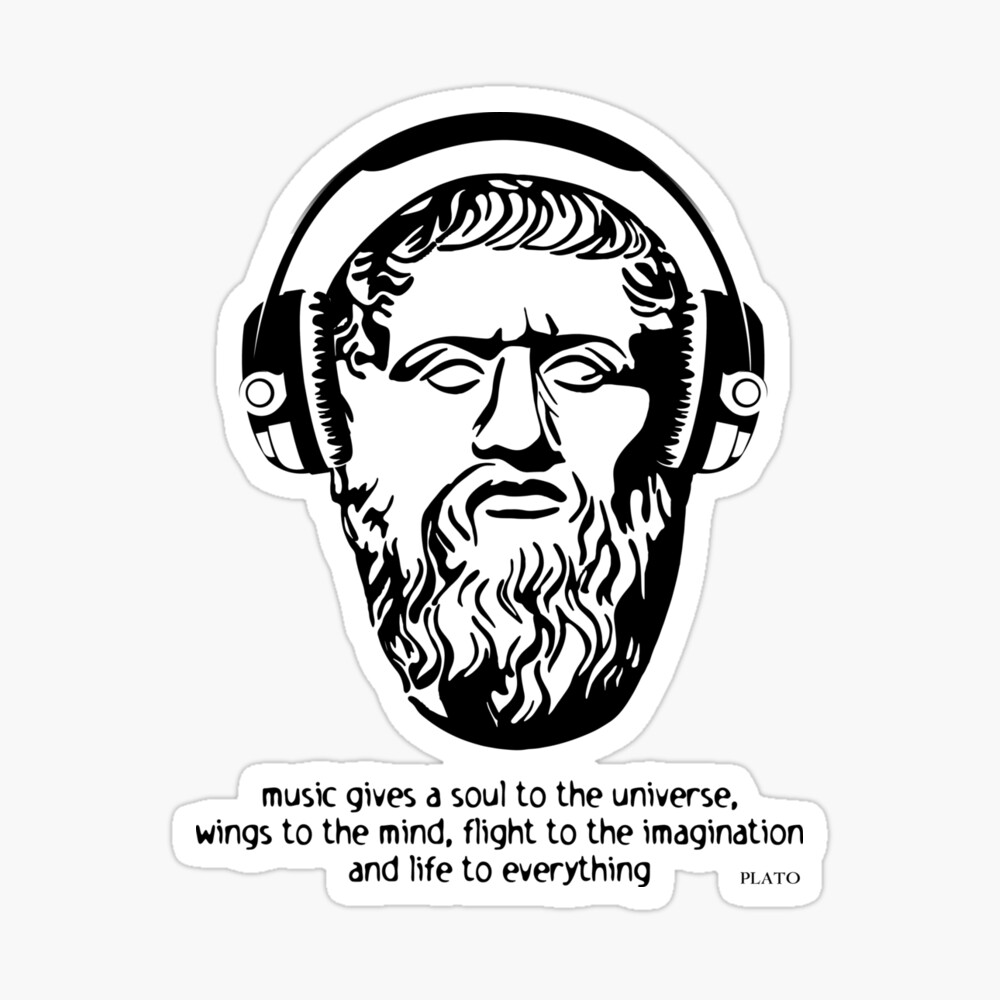
Resources and Related Links:
First posted 11/3/2023. |


