Showing posts with label Stormy Weather. Show all posts

Wednesday, April 22, 2020

Dave's Music Database Hall of Fame: Song Inductees (April 2020)

Originally posted 4/22/2020.

In honor of the 10th anniversary of the DMDB blog on January 22, 2019, Dave’s Music Database launched its own Hall of Fame. This is the sixth set of song inductees. These songs appear on the Dave’s Music Database list of standards. The top 100 list has been reordered based on overall DMDB points and the top ten songs not previously inducted have been included here.

American Quartet “Over There” (1917)

Inducted April 2020 as “Top Standard”

George M. Cohan’s “biggest song not written for Broadway” RCG became World War I’s most famous song. JA He penned the patriotic number after reading in the newspaper that the United States had declared war on Germany. He expanded the opening phrase of “Johnny Get Your Gun,” a popular song from 1886, into “a lyric that is both a call to arms and a vow not to come home till ‘it’s over, over there’.” RCGThe American Quartet, the Peerless Quartet, Nora Bayes, and Enrico Caruso all recorded #1 versions of the song. Read more.

Fred Astaire with Ginger Rogers & Leo Reisman’s Orchestra “Cheek to Cheek” (1935)

Inducted April 2020 as “Top Standard”

Composer Irving Berlin crafted thirteen songs which landed in Fred Astaire movies. “Cheek to Cheek,” which Berlin wrote in a day, TM was one of three to hit #1. It wasn’t just any #1, though; it “became one of Berlin’s greatest commercial successes,” TY spending more weeks atop the pop charts than any other song from 1935. WHC The song received an Academy Award nomination for best song. Read more.

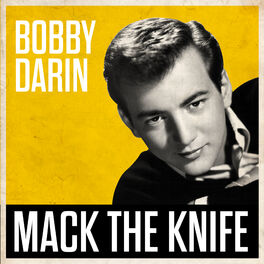
Bobby Darin “Mack the Knife” (1959)

Inducted April 2020 as “Top Standard”

“Mack the Knife” originated in 1928 as “Moritat,” which translates to “murder deed.” RCG Bertlot Brecht and Kurt Weill wrote the original German song about “a bloodthirsty Berlin gangster” RS500 on the prowl for the musical The Three Penny Opera. Despite the song’s gruesome subject matter, the irresistible melody made the song hit-worthy. KL Instead of translating the lyrics literally, Marc Blitzstein gave the song a rewrite. SJ It became a standard, charting six times in 1956 alone, with Bobby Darin’s the biggest of all. The song transformed his image into that of “a finger-snapping sophisticate at home in the cocktail lounge.” RS500 Read more.

Al Jolson “Swanee” (1920)

Inducted April 2020 as “Top Standard”

George Gershwin may be America’s greatest songwriter. By 1919, he had already written two Broadway revues, one of which included the song “Swanee.” LW Co-writer Irving Caesar (who later wrote “Tea for Two”) persuaded his friend Al Jolson to use it in his Broadway show Sinbad. LW It became Gershwin’s first major hit and his best-selling song in terms of both sheet music and record sales. JA The song parodies Stephen Foster’s 1851 song “Old Folks at Home,” WK which came to be a symbol of freedom and emancipated slaves. Jolson performed the song in blackface, which is horrifically racist in hindsight, but was popular entertainment in the minstrel shows of the day. Read more.

Al Jolson “April Showers” (1922)

Inducted April 2020 as “Top Standard”

“April Showers” ranks as “one of America’s greatest ballads.” PS Louis Silvers composed the music and B.G. “Buddy” DeSylva wrote the lyrics. Al Jolson introduced “April Showers” in the 1921 Broadway musical, Bombo. It was his 13th #1 song and biggest hit to date PM and became “a well-known Jolson trademark.” WK Only “Sonny Boy,” from 1928, would spend more weeks on top of the chart (twelve). PM The song also became the biggest hit of 1922. WHC Read more.

Billy Murray & Haydn Quartet “Take Me Out to the Ball Game” (1908)

Inducted April 2020 as “Top Standard”

“The unofficial anthem of American baseball” RCG has been “affectionately referred to…as the ‘other’ national anthem.” SH It is “one of the most easily recognized songs in America,” SH behind only “Happy Birthday” and “The Star Spangled Banner,” SH having been sung at nearly every U.S. professional baseball game for the last 100 years. PS Surprisingly, neither the song’s composer (Albert Von Tilzer) nor lyricist (Jack Norworth) had ever seen a baseball game prior to writing the song. PS It got its start on vaudeville where Norworth’s wife, singer Nora Bayes, introduced it. JA-188 In 1908 Billy Murray’s recording of the song with the Haydn Quartet became the biggest song of the year. WHC Read more.

Peerless Quartet “Let Me Call You Sweetheart” (1911)

Inducted April 2020 as “Top Standard”

“Sweetheart” was “a tremendous hit in vaudeville” JA which “became a favourite around player pianos and community sings.” RCG It “is a straightforward declaration of love that came to be more of a sing-a-long than a ballad. Lou Friedman wrote the music in a waltzing tone while Beth Slater Whitson wrote the lyrics, [in] which he proclaims his love and asks the other to ‘whisper that you love me too.’” RCG With over 6 million sales of the sheet music, it is one of the top ten best selling sheet music songs of the first half of the century. PM Read more.

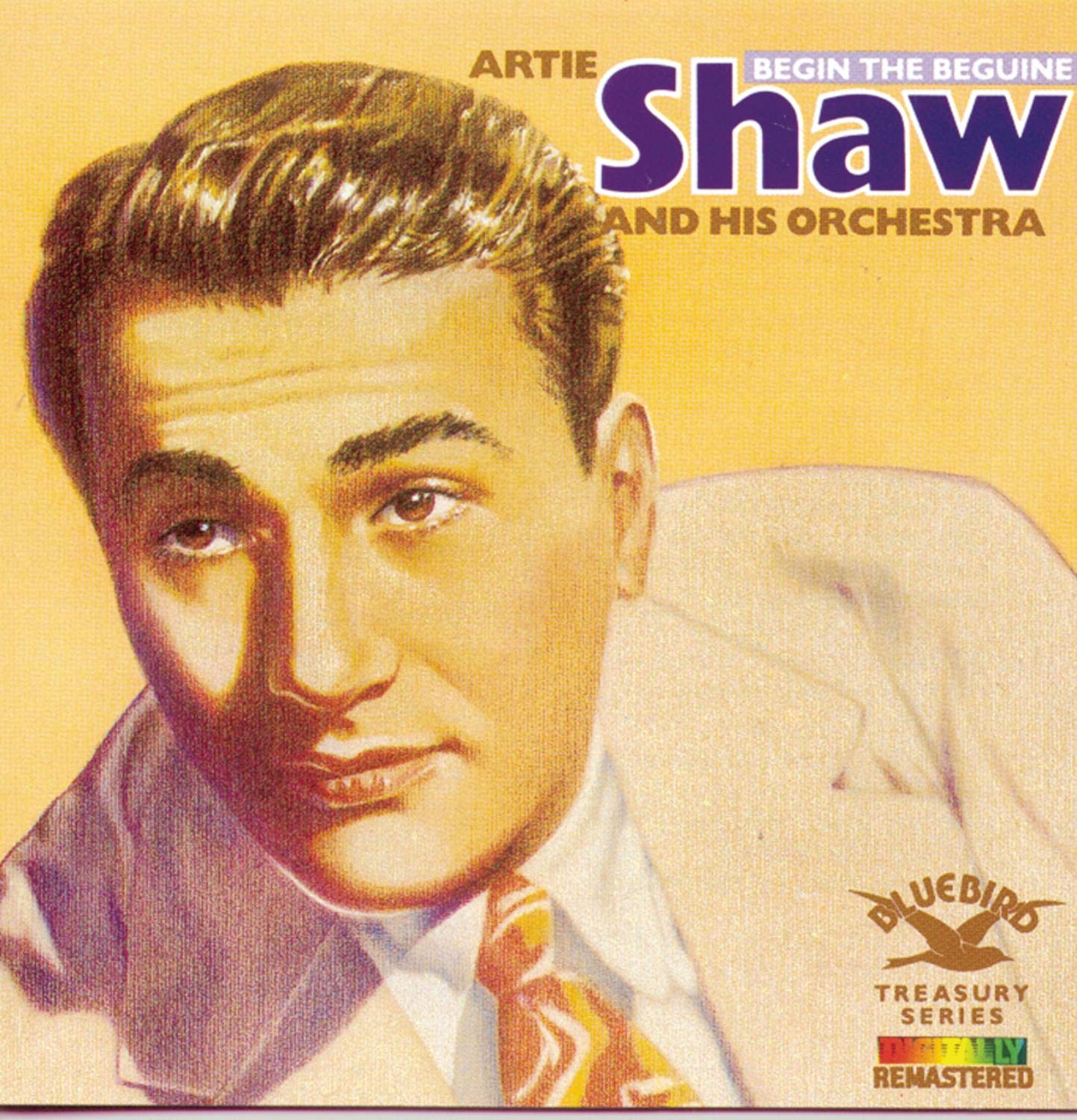
Artie Shaw “Begin the Beguine” (1938)

Inducted April 2020 as “Top Standard”

“Beguine” refers to a 1930s’ Cuban dance similar to a rumba. Depending on the account one chooses to believe, songwriter Cole Porter experienced it for the first time on a luxury cruise during a stop in Martinique or a Paris dance hall frequented by Martinique imigrants. He adopted the dance’s rhythm for a big production number for Jubilee, a musical comedy which debuted in 1935. SB Xavier Cugat had a #13 hit with it that year. However, it was Artie Shaw’s version three years later which became a #1 PM-476 and “one of the most popular jazz standards.” SB Read more.

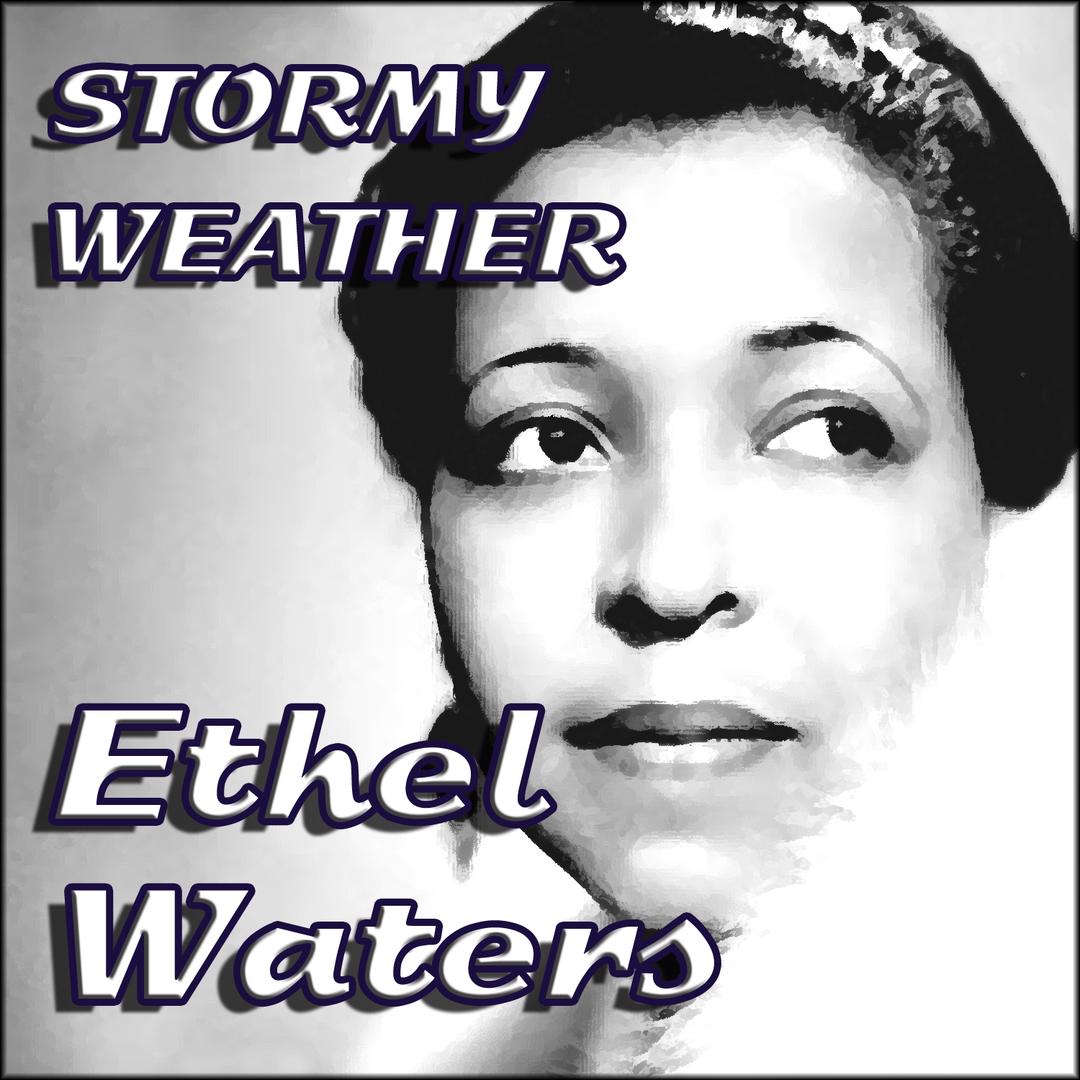
Ethel Waters “Stormy Weather (Keeps Rainin' All the Time)” (1933)

Inducted April 2020 as “Top Standard”

In the early 1930s, the famed Cotton Club in Harlem, New York, featured African-American performers on stage although they weren’t allowed to sit in the audience. TM Harold Arlen, a cantor’s son, and Ted Koehler wrote this “bluesy perennial” TM for Cab Calloway to introduce in a Cotton Club revue, but decided it was more fitting for a female singer and gave it to Ethel Waters. TY When she performed “Stormy Weather” in the show Cotton Club Parade, she sang it “with all her soul…expressing the anguish of people who found nothing but gloom and misery…because of the Depression.” TY Metronome magazine called it “1933’s biggest hit.” SS “It has become a cabaret standard.” JA Read more.

Paul Whiteman “Whispering” (1920)

Inducted April 2020 as “Top Standard”

This was the debut chart single for Paul Whiteman, and what a beginning it was. It was the second biggest hit of the year WHC and the biggest chart success of Whiteman’s career. It was the first of Whiteman’s 30 songs to go all the way to the top and helped him to become the most popular bandleader of the pre-swing era and the dominant force in American popular recording. PM “Whispering” sold over two million copies which, considering the number of record players in use then, would be the equivalent today of sales of 20 million. TY The online All Music Guide says more than 700 different versions of the song have been recorded, including versions to chart in four different decades. Read more.

Saturday, April 23, 2011

50 years ago: Judy Garland recorded live at Carnegie Hall

First posted 3/18/2008; updated 10/2/2020.

Judy at Carnegie Hall

Judy Garland


Recorded: April 23, 1961


Released: July 10, 1961


Charted: July 31, 1961


Peak: 113 US, 13 UK, -- CN, -- AU


Sales (in millions): 0.5 US, -- UK, 0.5 world (includes US and UK)


Genre: vocal jazz/traditional pop


Tracks, Disc 1:

Song Title (date of single release, chart peaks). Chart information is for the original studio recordings. Click for codes to singles charts.

  1. Overture: a) The Trolley Song b) Over the Rainbow c) The Man That Got Away [5:48]
  2. When You’re Smiling (The Whole World Smiles with You) (Mark Fisher, Joe Goodwin, Larry Shay) [3:29]
  3. Medley: [6:27]
    Almost Like Being in Love/ (Alan Jay Lerner, Frederick Loewe)
    This Can’t Be Love (Richard Rodgers, Lorenz Hart)
  4. Do It Again (George Gershwin, Buddy DeSylva) [6:16]
  5. You Go to My Head (J. Fred Coots, Haven Gillespie) [2:43]
  6. Alone Together (Howard Dietz, Arthur Schwartz) [5:38]
  7. Who Cares As Long As You Care for Me (George Gershwin, Ira Gershwin) [1:46]
  8. Puttin’ on the Ritz (Irving Berlin) [2:45]
  9. How Long Has This Been Going On? (George Gershwin, Ira Gershwin) [4:12]
  10. Just You, Just Me (Jesse Greer, Raymond Klages) [2:16]
  11. The Man That Got Away (Harold Arlen, Ira Gershwin) [5:03] (8/21/54, 22 US, 18 UK)
  12. San Francisco (Walter Jurmann, Gus Kahn, Bronislaw Kaper) [4:45]
  13. I Can’t Give You Anything But Love (Dorothy Fields, Jimmy McHugh) [6:46]
  14. That’s Entertainment (Howard Dietz, Arthur Schwartz) [6:38]

Tracks, Disc 2:

  1. Come Rain or Come Shine (Harold Arlen, Johnny Mercer) [7:23]
  2. You’re Nearer (Richard Rodgers, Lorenz Hart) [2:33]
  3. A Foggy Day (George Gerswhin, Ira Gershwin) [3:04]
  4. If Love Were All (Noel COward) [2:53]
  5. Zing! Went the Strings of My Heart (James F. Hanley) [4:04] (7/17/43, 22 US)
  6. Stormy Weather (Harold Arlen, Ted Koehler) [6:11]
  7. Medley: [3:56]
    You Made Me Love You (Joseph McCarthy, James V. Monaco, Roger Edens)/
    For Me and My Gal (George W. Meyers, Edgard Leslie, E. Ray Goetz) (1/24/42, 3 US)/
    The Trolley Song (Hugh Martin, Ralph Blane) (11/18/44, 4 US)
  8. Rock-a-Bye Your Baby with a Dixie Melody (Sam M. Lewis, Jean Schwartz, Joe Young) [5:22]
  9. Over the Rainbow (Harold Arlen, Yip Harburg) [5:47] (9/9/39, 5 US)
  10. Swanee (Irving Caesar, George Gershwin) [7:31]
  11. After You’ve Gone (Henry Creamer, Turner Layton) [4:20]
  12. Chicago (Fred Fisher) [5:15]


Total Running Time: 122:51

Rating:

4.554 out of 5.00 (average of 9 ratings)


Quotable: “One of pop music’s greatest live recordings” – Jason Verlinde, Amazon.com


Awards:

About the Album:

“The late ‘50s were tough on Judy Garland, but this live recording…would (rightfully) bring the legendary icon back into the spotlight.” AZ “With relentless verve, Garland takes on her entire musical catalogue with astonishing aplomb. There is little sign of the decades of self-abuse which had left her frail by the early ‘60s.” AMG

The album won five Grammys, including Album of the Year, and was Garland’s bestselling record. The album confirmed “that, yes, on certain levels, she still had it. Her vocals are as strong as ever on these tunes, and Garland has fun with an audience obviously enraptured by her charms. She’s self-deprecating where necessary – on You Go to My Head she forgets the lyrics but keeps improvising. But mostly she just shines, especially on tunes she made famous, such as…Over the Rainbow. This is easily one of pop music’s greatest live recordings and a fine testament to Garland’s recorded legacy.” AZ

Other than her own songs, she tackles a number of standards. In fact, eight songs from this album are featured in the DMDB book The Top 100 Songs of the Pre-Rock Era, 1890-1953. In addition to “Over the Rainbow” and For Me and My Gal, which she took to #3 in 1942, she covers three songs which Al Jolson took to #1 – You Made Me Love You (1913), Rock-a-Bye Your Baby with a Dixie Melody (1918), and Swanee (1920). She also covers songs which Marion Harris (After You’ve Gone, 1919), Cliff Edwards (I Can’t Give You Anything But Love, 1928), and Ethel Waters (Stormy Weather, 1933) took to #1.


Notes:

The “40th anniversary edition…is a completely fresh experience even for those intimately familiar with previous versions. By accessing tapes which have not been used on any other release…many sonic foibles which plagued the original have now been repaired. The overwhelming success of this album…makes it a prime candidate for a sonic overhaul. By reclaiming tapes that were once considered MIA, the sound is now notably more balanced. In addition, much of the fake applause has been thoughtfully removed, unveiling previously masked dramatic pacing and audience interplay between songs.” AMG

“But the highlight of the entire package is the return of Alone Together from the actual Carnegie Hall performance. The song had been replaced by a studio version on the 1989 CD reissue due to missing master tapes. Since then, those tapes have been put back into commission and provide the jaw-dropping sound on this delightful set.” AMG

Resources and Related Links:

Friday, June 17, 1983

50 years ago: Ethel Waters hit #1 with “Stormy Weather”

Stormy Weather (Keeps Rainin’ All the Time)

Ethel Waters

Writer(s): Harold Arlen, Ted Koehler (see lyrics here)


First Charted: May 20, 1933


Peak: 13 US, 11 GA (Click for codes to singles charts.)


Sales (in millions): -- US, -- UK, -- world (includes US + UK)


Airplay/Streaming (in millions): -- radio, 0.59 video, -- streaming

Stormy Weather (Keeps Rainin’ All the Time)

Lena Horne


First Charted: September 4, 1943


Peak: 21 US (Click for codes to singles charts.)


Sales (in millions): --


Airplay/Streaming (in millions): -- radio, -- video, -- streaming

Awards (for Ethel Waters’ version):


Awards (for Lena Horne’s version):

About the Song:

In the early 1930s, the famed Cotton Club in Harlem, New York, featured African-American performers on stage although they weren’t allowed to sit in the audience. TM Harold Arlen, a cantor’s son, and Ted Koehler wrote this “bluesy perennial” TM for Cab Calloway to introduce in a Cotton Club revue, but decided it was more fitting for a female singer and gave it to Ethel Waters. TY

Waters established herself as an “incomparable interpreter of the American Songbook,” NRR but began her career as a blues singer before adapting her voice to a more conversational style and reshaping herself as a pioneer jazz singer. NRR When she performed “Stormy Weather” in the show Cotton Club Parade, she sang it “with all her soul…expressing the anguish of people who found nothing but gloom and misery…because of the Depression.” TY “Her career – already in high flight – soared to a still loftier trajectory.” SS Waters called it “a turning point in my life.” SS

Her 1933 recording of the song was a #1 hit (Metronome magazine called it “1933’s biggest hit” SS), as was Arlen’s own recording with Leo Reisman’s Orchestra. Guy Lombardo, Duke Ellington, and Ted Lewis also had top ten hits with the song and Lena Horne took it to #21 a decade later PM when she performed in the 1943 film of the same name. She made “Stormy Weather” “her signature song [and] an autobiographical statement” TM as she became “a beacon for black performers.” TM “Her keen beauty, soprano lilt and silky poise would have made her a Hollywood star if the industry hadn’t been so profoundly racist.” TM

“Summarizing a century of pop music, the song sounds fresh and poignant in this century as well.” TM “It has become a cabaret standard” JA in which the meaning of the song lyrics are conveyed with subtle theatricality.” NRR


Resources:

  • DMDB Encyclopedia entry for Ethel Waters
  • DMDB Encyclopedia entry for Harold Arlen
  • DMDB Encyclopedia entry for Lena Horne
  • DMDB Encyclopedia entry for Ted Koehler
  • JA David A. Jasen (2002). A Century of American Popular Music: 2000 Best-Loved and Remembered Songs (1899-1999). Routledge: Taylor & Francis, Inc. Page 181.
  • NRR National Recording Registry
  • SS Steve Sullivan (2013). Encyclopedia of Great Popular Song Recordings (Volumes I & II). Scarecrow Press: Lanham, Maryland. Page 180.
  • TM Time magazine (10/24/2011). “All Time 100 Songs”
  • TY Don Tyler (1985). Hit Parade 1920-1955. New York, NY: Quill. Page 70.
  • PM Joel Whitburn (1986). Pop Memories 1890-1954. Menomonee Falls, WI; Record Research, Inc. Page 585.


First posted 7/8/2012; last updated 8/16/2022.