Showing posts with label Garden Party. Show all posts

Tuesday, March 8, 2022

Marillion and Fish: The Top 100 Songs/Top 20 Albums


Fish-era Marillion


Steve Hogarth-era Marillion

Marillion & Fish

Top 100 Songs/
Top 20 Albums

This list was originally posted on 4/25/2015 in honor of Fish’s birthday. He was born Derek Dick on April 25, 1958. From 1981 to 1988, he was the lead singer of British neo-progressive-rock group Marillion. They had their greatest success with 1985’s Misplaced Childhood, a #1 album in the UK. After the follow-up album, 1987’s Clutching at Straws and the live album The Thieving Magpie in 1988, Fish left the band for a solo career.

Fish released 11 studio albums as a solo act from 1990 to 2020. He claimed that his 2020 album, Weltschmerz, would be his last solo effort. Meanwhile, Marillion replaced Fish with Steve Hogarth. From 1989 to 2016, they released thirteen studio albums. The first three, Seasons End (1989), Holidays in Eden (1991), and Brave (1994) were all top-10 albums in the UK. Both acts have built devoted fanbases by asking fans to pre-order releases as a means of financing studio albums. They’ve also both released multiple live albums through their websites that are not always available through convential retail outlets.

Click here to see other best-of lists from performers and here to see other best-of lists from songwriters and/or producers.


Spotify Podcast:

Check out the Dave’s Music Database podcasts Marillion: The Best of the Fish Years, 1981-1988 (premiere: March 1, 2022 at 7pm CST) and Marillion: The Best of the Hogarth Years, 1989-2022 (premiere: March 8, 2022 at 7pm CST). Both are based on this list. Tune in every Tuesday at 7pm CST for a new episode based on the lists at Dave’s Music Database.

Awards for Marillion:

Awards for Fish:


Top 100 Songs by Marillion and Fish


Dave’s Music Database lists are determined by song’s appearances on best-of lists as well as chart success, sales, radio airplay, streaming, and awards. Songs are by Marillion unless noted otherwise.

DMDB Top 5%:

1. Kayleigh (1985)

DMDB Top 20%:

2. Incommunicado (1987)
3. Script for a Jester’s Tear (1983)
4. Warm Wet Circles (1987)
5. He Knows You Know (1983)
6. Sugar Mice (1987)
7. Garden Party (1983)
8. Lavender (1985)
9. Heart of Lothian (1985)
10. Lady Nina (1985)

11. Shortcut to Somewhere (Fish with Tony Banks, 1986)
12. Freaks (1985)
13. A Gentleman’s Excuse Me (Fish, 1990)
14. Estonia (1997)
15. Market Square Heroes (1982)
16. Hooks in You (1989)

Beyond the DMDB Top 20%:

17. Sympathy (1992)
18. The Hollow Man (1994)
19. Punch and Judy (1984)
20. Assassing (1984)

21. Childhood’s End? (1985)
22. Fugazi (1984)
23. Beautiful (1995)
24. Alone Again in the Lap of Luxury (1994)
25. Easter (1989)
26. The Uninvited Guest (1989)
27. She Chameleon (1984)
28. Forgotten Sons (1983)
29. Solo (Fish, 1993)
30. No One Can (1991)

31. After Me (1989)
32. Cliché (Fish, 1990)
33. Blind Curve (1985)
34. Cover My Eyes (1991)
35. Pseudo Silk Kimono (1985)
36. Big Wedge (Fish, 1989)
37. Chelsea Monday (1983)
38. Tux On (1987)
39. Bitter Suite (1985)
40. Credo (Fish, 1991)

41. That Time of the Night (1987)
42. Lords of the Backstage (1985)
43. A Collection (1991)
44. Another Murder of a Day (Fish with Tony Banks, 1991)
45. Cinderella Search (1984)
46. Just Good Friends (Fish, 1991)
47. Going Under (1987)
48. Hold Your Head Up (Fish, 1992)
49. The Web (1983)
50. Fortunes of War (Fish, 1994)

51. The Party (1991)
52. Incubus (1984)
53. Dry Land (1991)
54. The Last Straw (1987)
55. Internal Exile (Fish, 1991)
56. You’re Gone (2004)
57. This Party’s Over (Fish, 2020)
58. Don’t Hurt Yourself (2004)
59. Jigsaw (1984)
60. Slainte Mhath (1987)

61. Angel Face (Fish with Tony Banks, 1991)
62. Most Toys (2007)
63. White Russian (1987)
64. Just for the Record (1987)
65. White Feather (1985)
66. The King of Sunset Town (1989)
67. Waterhole (Expresso Bongo) (1985)
68. Living with the Big Lie (1994)
69. Torch Song (1987)
70. Hotel Hobbies (1987)

71. Question (Fish, 1992)
72. Made Again (1994)
73. Lady Let It Lie (Fish, 1994)
74. Something in the Air (Fish, 1991)
75. Man of a Thousand Faces (1997)
76. Grendel (1982)
77. State of Mind (Fish, 1989)
78. Half-Full Jam (2008)
79. The Voyeur (I Like to Watch) (Fish, 1989)
80. Vigil (Fish, 1990)

81. The Great Escape (1994)
82. Incomplete (Fish, 1999)
83. See It Like a Baby (2007)
84. The Company (Fish, 1990)
85. Lucky (Fish, 1991)
86. Margaret (1983)
87. Dear Friend (Fish, 1991)
88. Whatever Is Wrong with You? (2008)
89. Boston Tea Party (Fish, 1993)
90. Runaway (1994)

91. Cannibal Surf Babe (1995)
92. Apeman (Fish, 1993)
93. Berlin (1989)
94. Garden of Remembrance (Fish, 2020)
95. Family Business (Fish, 1990)
96. Emerald Lies (1984)
97. Thank You Whoever You Are (2007)
98. Three Boats Down from the Candy (1982)
99. Power (2012)
100. I Will Walk on Water (1992)


Top 20 Studio Albums by Marillion and Fish


Dave’s Music Database lists are determined by album’s appearances on best-of lists as well as chart success, sales, critics’ ratings, and awards. Albums are by Marillion unless noted otherwise.

1. Misplaced Childhood (1985)
2. Script for a Jester’s Tear (1983)
3. Clutching at Straws (1987)
4. Brave (1994)
5. Seasons End (1989)
6. Fugazi (1984)
7. Vigil in a Wilderness of Mirrors (Fish, 1990)
8. Marbles (2004)
9. Holidays in Eden (1991)
10. Internal Exile (Fish, 1991)

11. Afraid of Sunlight (1995)
12. Anoraknophobia (2001)
13. Raingods with Zippos (Fish, 1999)
14. Weltschmerz (Fish, 2020)
15. Songs from the Mirror (Fish, 1993)
16. This Strange Engine (1997)
17. Sunsets on Empire (Fish, 1997)
18. Field of Crows (Fish, 2004)
19. 13th Star (2007)
20. Happiness Is the Road (2008)


Resources and Related Links:


First posted 4/25/2015; last updated 3/8/2022.

Monday, March 14, 1983

Marillion released debut album, Script for a Jester’s Tear

Script for a Jester’s Tear

Marillion


Released: March 14, 1983


Peak: 175 US, 7 UK, 51 CN Click for codes to charts.


Sales (in millions): -- US, 0.3 UK, 0.3 world (includes US and UK)


Genre: neo-progressive rock


Tracks:

Click on a song titled for more details.
  1. Script for a Jester’s Tear [8:42]
  2. He Knows You Know [5:07]
  3. The Web [9:10]
  4. Garden Party [7:17]
  5. Chelsea Monday [8:17]
  6. Forgotten Sons [8:22]

Total Running Time: 46:45


Other Songs from This Era:

  • Market Square Heroes (single, released 10/25/1982)
  • Three Boats Down from the Candy (B-side, released 10/25/1982)
  • Grendel (B-side, released 10/25/1982)
  • Charting the Single (B-side of “He Knows You Know,” released 1/31/1983)
  • Margaret (live) (B-side of “Garden Party,” released 6/6/1983)


The Players:

  • Derek Dick, aka Fish (vocals)
  • Steve Rothery (guitar)
  • Mark Kelly (keyboards)
  • Pete Trewavas (bass)
  • Mick Pointer (drums)

Rating:

3.897 out of 5.00 (average of 23 ratings)


Awards:

(Click on award to learn more).

The Band’s Origins

Marillion formed in 1979 in Aylesbury, Buckinhamshire, England. By the time of the neo-progressive rock band’s first officially released recordings in 1982, only drummer Mick Pointer and guitarist Steve Rothery remained from the original lineup. Fish had joined as the lead singer and lyricist, Mark Kelly as keyboardist, and Pete Trewavas as bassist. This lineup released the October 1982 single “Market Square Heroes” in October 1982, which included “Three Boats Down from the Candy” and the 17-minute epic “Grendel;” all three appeared on the 25th anniversary reissue of the Script album.

In March 1983, they released Script for a Jester’s Tear, “a landmark debut album that would give prog a much-needed shot in the arm.” DE Two singles were released in support of the album – “He Knows You Know” in January 1983 and “Garden Party” in June 1983.

At the Neo-Progressive Rock Forefront

The myth that punk rock killed prog has been overstated; the genre “was doing a job of killing itself. Its founding fathers had either imploded (Yes, ELP), streamlined their sound so much as to be virtually unrecognizable (Genesis, Rush), or faded into commercial irrelevance (Caravan, Camel).” DE Marillion was “regarded as the pre-eminent force of this neo prog movement,” MD a banner Fish wasn’t excited to hoist. “I never saw us as being champions of anything…We were just doing what we did.” DE As Trewavas said, “We weren’t necessarily a rock band, we certainly weren’t a pop band. But we were selling out clubs like the Marquee, and we had quite a fan base.” DE They weren’t the first of their kind, “but they were certainly the most successful, and arguably the most important.” DE

Detractors have accused Marillion of copying early Genesis when they were fronted by Peter Gabriel, a comparison not without merit considering both band’s tendencies toward complicated imagery and dramatic flair, not to mention the theatrical stage presences of their frontmen.

Regarding the musical similarities, Fish said, “I look back on it now and a lot of those criticisms were justified. I mean, ‘Grendel’ [the 17-minute epic featured on the ‘Market Square Heroes’] was ‘Supper’s Ready’ [a nearly 23-minute song from Genesis’ 1972 Foxtrot album]. We were holding onto the skirts of our influences, trying to find the confidence to break away from it.” DE “Mark Kelly’s keyboard textures and Steve Rothery’s restless guitar work” DE also “paid lip service to their influences.” DE Even so, “this was new music for a new decade” DE as Marillion reignited interest in progressive rock.

About the Album

In Jon Collins’ book Separated Out, he describes the album as “ambitious, varied, moody, dramatic, lyrical, accomplished.” JC-39 The songs “recounted a series of stories relating to a character in a particular situation…Though never mentioned explicitly, the character was the jester, representing the hedonistic alter-ego of Derek Dick,” JC-39 i.e. Fish. The character of the crying jester would serve as the inspiration for the album title and its artwork.

A large part of the band’s appeal was due to Fish, who Rothery called “a very forceful frontperson.” DE The songs on the album completely satisfy as Fish’s poetic and introspective lyrics require repeat listening to completely absorb. Fish always has something to say and is never at a loss for a clever way to do so.

Musically, it sounds like the rest of the band shuffled through instrumental bits and pieces until they found suitable background noise to accommodate whatever Fish retrieved from what one guesses is a vast collection of journals and diaries. That isn’t to say that the music doesn’t adequately complement the lyrics (the title track exemplifies how the music can enhance the drama of the vocals), just that neither appears to have been crafted with the other in mind.

The Songs

Here’s a breakdown of each of the individual songs.

Script for a Jester’s Tear

Marillion

Writer(s): lyrics: Derek Dick (Fish); music: Derek Dick (Fish), Steve Rothery, Pete Trewavas, Mick Pointer, Mark Kelly (see lyrics here)


Released: Script for a Jester’s Tear (1983)


Peak: 1 DF Click for codes to charts.


Sales (in millions): --


Airplay/Streaming (in millions): -- radio, 4.2 video, 4.97 streaming

Awards:

(Click on award to learn more).

About the Song:

The lead track from Marillion’s debut album of the same name was simultaneously the oldest and newest amongst the batch of songs which comprised the album. It was the oldest in that it owed its origins to “The Crying Jester,” the first song Fish ever wrote. That was “a total rip-off of a Jon Anderson song…written on the night that Keith Moon died: he was…the crying jester.” JC-39

However, it was also the newest in that the song that the actual song “Script for a Jester’s Tear” was newer than any of the other songs on the album, all of which had been around for a year or more. Lead singer Derek Dick, better known as Fish, said the song was inspired by his turbulent love life. “I was getting involved in my first serious – and I mean really serious – relationship and all the questions and issues that brought with it. There was a lot of introspection going on in the lyrics. If I look back, it was put across in a very naïve way.” DE

The “poignant title track” JF “is a showpiece of Marillion musicianship.” JC-39 AllMusic.com’s John Franck said, “Fish leads his band of merry men on a brokenhearted tour de force that culminates with the singer decrying that ‘the game is over.’” JF The song starts “with a piano-led lamentation that then transitioned into a playful Medieval-styled mid-section that conjured an image of a bustling king’s court. The mood then turned gloomy and dark with marked flourishes of distorted guitar alongside lush organ, then bleeding into an epilogue of anthemic guitar ad-lib as well as glassy chimes and bells.” TC

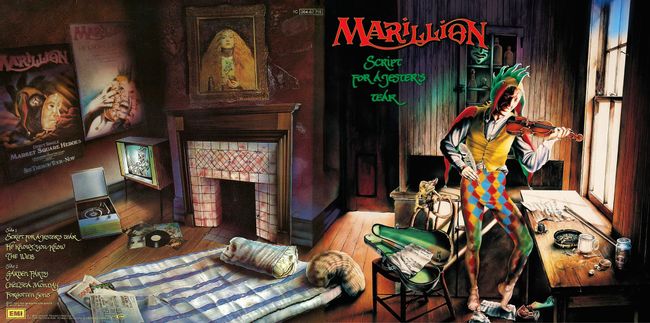
The title song not only served as the album’s focal point, but the inspiration for the accompanying artwork. The artist, Mark Wilkinson, said Fish wanted to portray a struggling writer who looked like a jester. “I then…set him in a bedsit surrounded by lots of objects to portray that sort of existence,” MD such as sheet music, records on the floor, an ashtray, an empty coffee cup, and crumpled paper.

He Knows You Know

Marillion

Writer(s): Lyrics by Derek Dick (Fish). Music by Marillion (Dick/ Kelly/ Mosley/ Rothery/ Trewavas.


Released: 1/31/1983 as a single, Script for a Jester’s Tear (1983)


B-side: “Charting the Single”


Peak: 21 AR, 35 UK, 2 DF Click for codes to charts.


About the Song:

This “rockin’ stomper” CR was the first single and the only cut on the album to come in under seven minutes. Lyrically, it “sweated junkie paranoia from its every pore” DE while musically it was “vibing off something more sinister and metallic, courtesy of the scathing guitar as well as punchy bassline.” CR

Fish explained that the song was “about someone who went from nervous exhaustion, through depression then full-scale drug abuse.” JC-39 It was inspired by his own excesses as well as a friend’s. JC-39

The Web

Marillion

Writer(s): Lyrics by Derek Dick (Fish). Music by Marillion (Dick/ Kelly/ Mosley/ Rothery/ Trewavas.


Released: Script for a Jester’s Tear (1983)


Peak: -- Click for codes to charts.


About the Song:

On this “nine-minute, textured epic,” CR “Fish’s lyrics veered between rage, frustration, and heartbreak.” DE “With its spider-like guitar plucks, keyboard melodies, and heat-of-the-moment guitar interlude” CR this “was a prog bedsit anthem.” DE

The song was one of the band’s oldest, starting life as an instrumental. Fish took some of the lyrical inspiration from Penelope, wife of Odysseus. She said she’d choose a new husband after finishing a death shroud for Odysseus. To stall, she would undo her work each night. JC-39

Garden Party

Marillion

Writer(s): Lyrics by Derek Dick (Fish). Music by Marillion (Dick/ Kelly/ Mosley/ Rothery/ Trewavas.


Released: 6/6/1983 as a single, Script for a Jester’s Tear (1983)


B-side: “Margaret (live)”


Peak: 16 UK, 4 DF Click for codes to charts.


About the Song:

The second single from the album “showcases Marillion at the peak of its powers.” JF Fish lashes out at the cultural elite with phrases like “smiles polluted with false charm” and “social climbers polish ladders, wayward sons again have fathers.” “It was the anti-Brideshead Revisited; a furious, sarcastic class-war anthem that punched and jabbed like a Muirhouse street fighter.” DE

“Here, the influence of Rush was very apparent, especially in Fish’s vocal timbre and phrasing that recalled that of Geddy Lee, as well as the rhythm section’s symphonic shots and overall structure.” CR Fish once commented, “it’s our most Genesis-y song!” JC-40

Chelsea Monday

Marillion

Writer(s): Lyrics by Derek Dick (Fish). Music by Marillion (Dick/ Kelly/ Mosley/ Rothery/ Trewavas.


Released: Script for a Jester’s Tear (1983)


Peak: 3 DF Click for codes to charts.


About the Song:

This “was initially a bit bluesy and starry, then breaking into a stellar mid-song guitar-led instrumental interlude, and ending in a piano coda.” CR

Fish was inspired to write this “tale of a doomed rich girl” DE because of a newspaper headline he read on “one of the amphetamine-fuelled early morning walks through London he had taken to going on.” DE He said it was about “a female character drowning in romanticism, unable to cope with reality.” JC-40

Forgotten Sons

Marillion

Writer(s): Lyrics by Derek Dick (Fish). Music by Marillion (Dick/ Kelly/ Mosley/ Rothery/ Trewavas.


Released: Script for a Jester’s Tear (1983)


Peak: 2 DF Click for codes to charts.


About the Song:

This song “concludes the opus magnificently.” JF Fish attacks warmongers “who order desecration, mutilation, verbal masturbation in their guarded bureaucratic wombs.” It “was ostensibly a protest song about the situation in Northern Ireland, though it could be read as a furious critique of the Thatcher government.” DE Fish said it was “about government manipulation” and how his cousin got injured during a riot. JC-40

Musically, it displays “vestiges of the band’s Punk and Post-Punk beginnings; then proceeded to the mid-section in a gracefully flowing rhythm; and ultimately, wrapped up the entire jester’s show with the majestic Yes/ELP/Styx-reminiscent, horn-adorned denouement.” CR

Notes:

A reissue includes a second disc with a demo of “He Knows You Know,” an alternate version of “Chelsea Monday,” and non-album tracks “Market Square Heroes” (two versions), “Three Boats Down from the Candy,” “Grendel,” and “Charting the Single.”

Resources/References:


Related DMDB Pages:


First posted 3/10/2011; last updated 8/4/2025.