Showing posts with label rock and roll origin songs. Show all posts

Monday, August 4, 2008

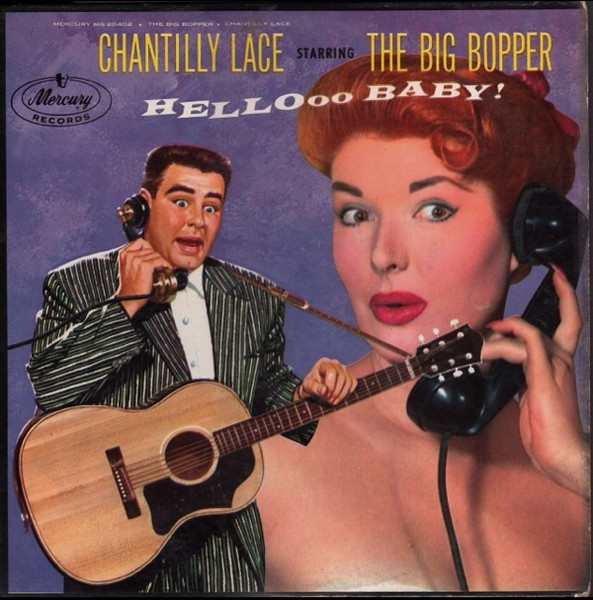
50 years ago: The Big Bopper “Chantilly Lace” charted

Chantilly Lace

The Big Bopper

Writer(s): J.P. Richardson (see lyrics here)


First Charted: August 4, 1958


Peak: 6 US, 4 CB, 4 HR, 3 RB, 12 UK, 2 CN, 2 DF (Click for codes to singles charts.)


Sales (in millions): -- US, -- UK, -- world (includes US + UK)


Airplay/Streaming (in millions): 2.0 radio, 11.0 video, 24.37 streaming

Awards:

Click on award for more details.

About the Song:

The Big Bopper was born Jiles Perry Richardson, Jr. in 1930 in Texas. The singer/songwriter and guitarist tragically died in an airplane crash in 1959 along with other rock and roll pioneers Buddy Holly and Ritchie Valens. In his short life, he worked as a radio disc jockey (where he picked up the nickname “The Big Bopper”) and served a stint in the Army before launching his career as a songwriter and eventually singer.

He only charted three times as a singer on the Billboard Hot 100 – all in 1958 – with “Chantilly Lace” (#6), “Big Bopper’s Wedding” (#38), and “Little Red Riding Hood” (#72). He is credited with creating the first music video, something he did for all three of his chart hits. He also wrote “White Lightning,” which was George Jones’ first #1 country hit, and “Running Bear,” a #1 pop hit for Johnny Preston. Still, the Big Bopper is most associated with “Chantilly Lace.”

The song, which used the same chord progression as Chuck Berry’s “Sweet Little Sixteen,” WK was originally called “That’s What I Like.” SF It was originally released as the B-side for “The Purple People Eater Meets the Witch Doctor,” a parody of Sheb Wooley’s “The Purple People Eater” and David Seville’s “Witch Doctor.” WK DJs preferred the flip side and “Chantilly Lace” became the third most played song of 1958. WB

Richardson’s background as a DJ played into the song’s success. The intro of the song had him announcing, in typical DJ patter, “this is the Big Bopper speakin’.” The technique helped people closely identify the song with him and made it easier for listeners to ask for the song at record stores. SF


Resources:


First posted 10/30/2022.

Thursday, June 15, 2006

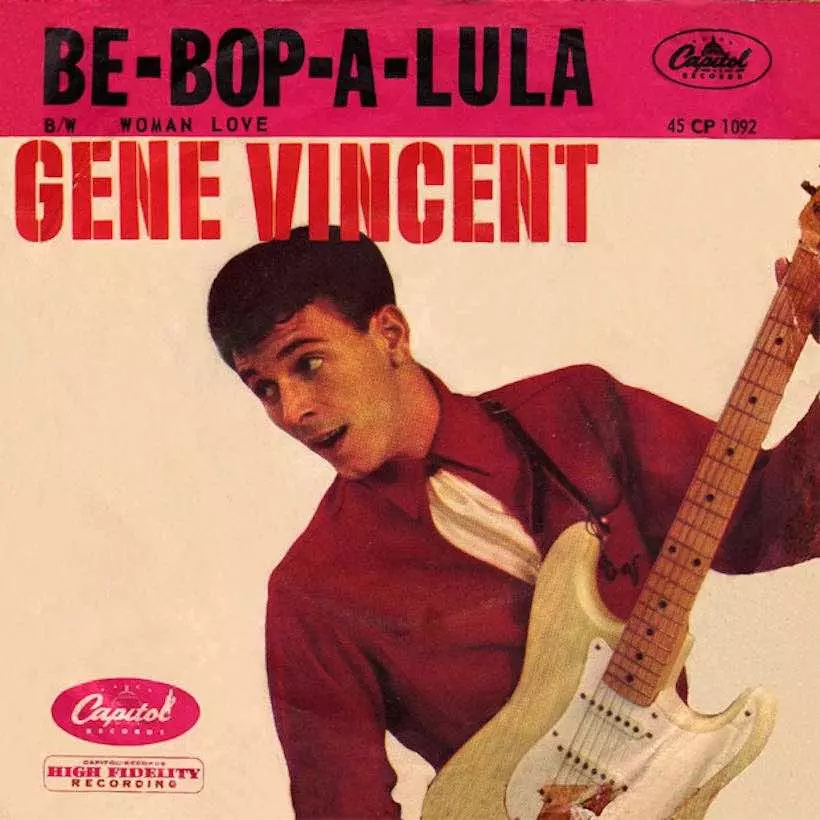
50 years ago: Gene Vincent “Be-Bop-A-Lula”

Be-Bop-A-Lula

Gene Vincent & His Blue Caps

Writer(s): Gene Vincent, Donald Graves Bill “Sheriff Tex” Davis (see lyrics here)


First Charted: June 15, 1956


Peak: 7 US, 5 CB, 6 HR, 7 CW, 8 RB, 16 UK, 2 DF (Click for codes to charts.)


Sales (in millions): 2.0 US


Airplay/Streaming (in millions): 1.0 radio, 8.36 video, 31.75 streaming

Awards:

Click on award for more details.

About the Song:

Singer and guitarist Gene Vincent was born in 1935 in Norfolk, Virginia. He only had four Billboard Hot 100 entries, but was considered one of rock and roll’s pioneering artists and in the UK “became one of the biggest influences on everyone who sang or played a guitar.” AH He was inducted into the Rock and Roll Hall of Fame and the Rockabilly Hall of Fame. His biggest hit, “Be-Bop-A-Lula,” drew comparisons to Elvis Presley.

It was Elvis, in fact, who inspired Vincent to pursue a music career. After seeing Elvis perform in September 1955, Vincent went to the radio station which had promoted the show and got an audience with DJ Bill “Sheriff Tex” Davis. Soon afterward, Vincent was the opening act for Carl Perkins when he came through town. Davis asked Perkins for his thoughts on the singer. Perkins though the boy had potential, particularly noting the song “Be-Bop-A-Lula.” AH Davis would become Vincent’s manager.

Different stories have circulated about how the song originated. Supposedly Vincent wrote the music for the song while recuperating from a motorcycle accident at the US Naval Hospital in Portsmouth, Virginia. However, the words have also been credited to Donald Graves, who may or may not have met Vincent in the hospital and may or may not have sold the song to Vincent for $25. TB Davis claims he and Vincent wrote the song after listening to “Don’t Bring Lulu.” WK Vincent claimed the lyrics were inspired by the comic strip “Little Lulu.” WK

The title is similar to the 1945 #3 hit “Be-Baba-Leba” for Helen Humes. Lionel Hampton re-recorded the song as “Hey! Ba-Ba-Re-Bop.” The phrase was widely used in the 1940s in jazz circles, lending its name to the bebop style. It supposedly was derived from the shout by Latin American bandleaders of “Arriba! Arriba!” WK Then there’s the melody. It’s nearly identical to the Drifers’ “Money Honey.” AH

A demo of “Be-Bop-A-Lula” was given to Capitol Records, who wanted a young singer to rival Elvis Presley. Vincent had “the rebel image and swagger they were looking for” SF along with “Presley-like good looks” DM and “a sulky country-blues baritone that fit the new rock and roll songs.” DM Vincent would never attain that level of stardom. He was troubled and dark and a slave to painkillers because of his motorcycle accident. TC However, “Be-Bop-A-Lula” earned Vincent a place in rock history nonetheless.

The record company invited Vincent to Nashville, Tennessee, where he recorded the song in Owen Bradley’s studio on May 4, 1956. WK It was released as the B-side to “Woman Love.” The BBC banned it and radio stations in the U.S. weren’t interested, but Capitol Records then made “Be-Bop-A-Lula” the A-side and it became a significant crossover hit reaching the top 10 on the pop, country, and R&B charts. It is “a gibberish song with no real lyrical content at all – but that doesn’t matter.” AH It “is probably the record which, more than any other, epitomizes 1956.” AH


Resources:


First posted 10/23/2022; last updated 3/30/2023.

Friday, April 14, 2006

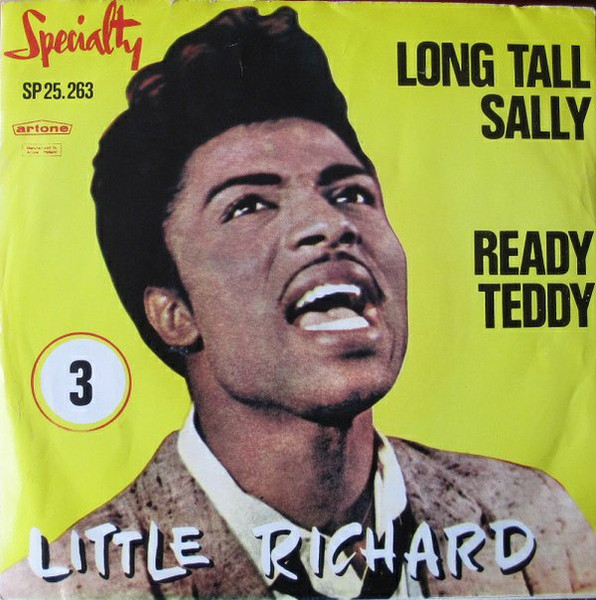
50 years ago: Little Richard “Long Tall Sally” hit #1 on the R&B chart

Long Tall Sally

Little Richard

Writer(s): Robert Blackwell, Enotris Johnson, Richard Penniman (see lyrics here)


First Charted: March 30, 1956


Peak: 6 US, 8 CB, 74 HR, 18 RB, 3 UK, 3 DF (Click for codes to charts.)


Sales (in millions): 1.0 US


Airplay/Streaming (in millions): 1.0 radio, 43.44 video, 74.5 streaming

Awards:

Click on award for more details.

About the Song:

Richard Penniman, aka Little Richard, was born in Georgia in 1932. The singer/songwriter has been called the “Architect of Rock and Roll” for his flamboyant personality and integral contributions to the genre in its infancy. He released a half dozen singles on two labels in the early ‘50s before striking gold with “Tutti Frutti” in 1955. The song reached the top 20 on the Billboard pop chart and was a #2 R&B hit.

While that is considered his signature song, its follow-up, “the equally scintillating” SS “Long Tall Sally,” was actually more successful, reaching #6 on the pop charts and #1 on the R&B charts. Producer Robert “Bumps” Blackwell discussed how some radio stations opted to play Pat Boone’s more sanitized version of “Tutti Frutti” so with “Long Tall Sally” “we decided to up the tempo…and get the lyrics going so fast that Boone wouldn’t be able to get his mouth together to do it!” SS The result, said critic Dave Marsh, “is pure rock and roll.” DM Amusingly, Boone did cover the song as did many others including the Beatles, Eddie Cochran, Wanda Jackson, Tom Jones, the Kinks, Jerry Lee Lewis, Carl Perkins, Elvis Presley, and Marty Robbins.

Blackwell said a popular DJ named Honey Chile introduced him to a teenager girl, Enotris Johnson, who walked all the way from Mississippi in hopes of selling a song to Little Richard SS in hopes of paying for treatment for her ailing aunt Mary. Blackwell took the lines (“Saw Uncle John with Long Tall Sally / They Saw Aunt Mary comin’ / So they ducked back in the alley”) to Richard WK who improvised the rest. DM

Some assumed Long Tall Sally was a cross-dresser, but Little Richard said she was a family friend who drank whiskey, claiming she was fighting a cold. He described her as tall, ugly, cockeyed, and having just two teeth. She was having an affair with John, who was married to Mary. The latter two fought on weekends and John would duck into alleys when he saw her coming. SF


Resources:


Related Links:


First posted 11/6/2022; last updated 3/25/2023.