Showing posts with label The Crickets. Show all posts

Sunday, October 21, 2007

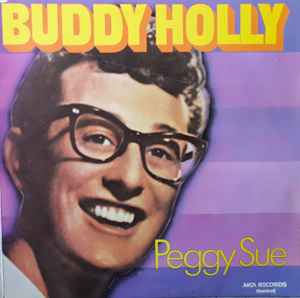
50 years ago: Buddy Holly “Peggy Sue” charted

Peggy Sue

Buddy Holly & the Crickets

Writer(s): Jerry Allison, Buddy Holly, Norman Petty (see lyrics here)


First Charted: October 21, 1957


Peak: 3 US, 4 HP, 2 CB, 3 HR, 2 RB, 6 UK, 4 DF (Click for codes to charts.)


Sales (in millions): 1.0 US


Airplay/Streaming (in millions): 2.0 radio, 15.5 video, 40.5 streaming

Awards:

Click on award for more details.

About the Song:

“What do you think McCartney and Lennon, Dylan, Jagger and Richards, Fogerty, Townshend, and the rest spent their teen years daydreaming about? They wanted to be rock and rollers: stand like Elvis, shout like Little Richard and Jerry Lee, rock like Chuck, testify like Muddy, and speak in music like Buddy Holly…Listen to ‘Peggy Sue’ and you’ll understand why.” PW For the “purpose of getting across…what he’s feeling, [Holly] invents a dozen new ways of using the human voice as a communicative vehicle.” PW

“Peggy Sue” was originally going to be named “Cindy Lou” after Buddy Holly’s baby niece. However, Jerry Allison, the Crickets’ drummer, suggested the name change to get back into the good graces with his girlfriend “Peggy Sue,” with whom he’d recently broken up. TB It worked. The two eloped on July 22, 1958. TB

The song was recorded at producer Norman Petty’s studio in Clovin, New Mexico on July 1, 1957 (actually before Holly charted with his #1 hit “That’ll Be the Day”). SS Amazingly, the song only features Holly and Allison. They started out trying to record it with a calypso feel, but it didn’t work. Then Holly suggested Allison do some drum rolls PW “which he did on a snare drum with the snares turned off.” TB This gave the song “a dynamic rock ‘n’ roll aspect.” TB Critic Dave Marsh called it “the biggest drum beats in rock and roll history.” DM

“It’s all that Holly can do to summon the strength to sing over them, and the guitar has to race to keep up.” DM He ends up “playing his rhythm guitar part entirely with speedy downstrokes.” TB Jimmy Guterman called it “the greatest rhythm guitar solo in all rock ‘n’ roll.” SS “The lyrics are childlike in their simplicity and repetition, but Holly belts them out with such conviction and sensuality that no one can doubt his intense ardor for this woman.” SS The song has “an almost throwaway quality [that] lifts the song and makes it irresistible.” TC


Resources:


Related Links:


First posted 3/26/2023; last updated 3/30/2023.

Sunday, September 23, 2007

50 years ago: Buddy Holly hit #1 with “That’ll Be the Day”

That’ll Be the Day

Buddy Holly & the Crickets

Writer(s): Buddy Holly, J.I. Allison, Norman Petty (see lyrics here)


Released: May 27, 1957


First Charted: July 27, 1957


Peak: 11 US, 4 HP, 3 CB, 3 HR, 2 RB, 13 UK, 1 DF (Click for codes to charts.)


Sales (in millions): 1.0 US, -- UK, 1.0 world (includes US + UK)


Airplay/Streaming (in millions): 3.0 radio, 10.46 video, 52.15 streaming

Awards:

Click on award for more details.

About the Song:

Buddy Holly was born Charles Hardin Holley in Lubbock, Texas in 1936. He knew what he wanted to do when he saw Elvis Presley live in 1955 and secured a contract with Decca Records by January 1956. He “gets counted as a pioneer of rock and roll, but…he didn’t turn up until the genre had become fairly well established in the charts.” AH He was “arguably the most important figure of this second wave.” AH Critic Dave Marsh called Holly’s band, the Crickets, “the first modern rock band” because they were a self-contained group comprised of a basic two-guitars, bass, and drum lineup DM led by “a self-contained writing, singing, playing machine who upped the ante even further by becoming the first rocker who really didn’t look like a rocker.” DT

Holly recorded a series of sessions for Decca throughout 1956 at producer Owen Bradley’s studio. Among the songs was an early version of “That’ll Be the Day” which Holly recorded with guitarist Sonny Curtis, bassist Don Guest, and drummer Jerry Allison. It had a more country-oriented vibe than the version that would become a hit. NRR Bradley said, “That’s the worst song I’ve ever heard.” KL

The idea for the song came about as the result of a John Wayne movie. Buddy Holly and drummer Jerry Allison went to see the Western The Searchers. Whenever a character would suggest something that wasn’t likely to happen, Wayne would sarcastically proclaim, “That’ll be the day.” SF One night at Jerry’s house, Buddy suggested that it would be nice if they could record a hit song, to which Jerry replied, “That’ll be the day.” SF They turned the title into a song in which Holly used the phrase “to declare his brash confidence that his girl would never leave him.” SS

In January 1957, Holly’s career was going nowhere. His contract with Decca expired so he went to Norman Petty, who’d impressed him with his production on Buddy Knox’s “Party Doll.” FB Holly and co. re-recorded “That’ll Be the Day” on February 27, 1957. TB While it was just a demo, Brunswick label chief Bob Thiele was sold and wanted to release it just as it was. Holly, though wasn’t technically permitted to re-record the song so it was suggested it be released under a group name instead. After rejecting “The Beetles” because it sounded creepy and people would want to squish them AH they settled on The Crickets “because of their happy, chirping sound.” KL Later, the Beatles moniker re-surfaced for the Fab-Four – inspired by the Crickets, and especially “That’ll Be the Day,” since it was one of the first songs John Lennon learned. HL

Sadly, Holly was killed in a plane crash on 2/3/59, a tragedy often known as “the day the music died” because it also took the lives of fellow rock singers the Big Bopper and Ritchie Valens. His career was short, but with “that mean guitar, firing off dangerous staccato bursts,” DM “endearing hiccup in Holly’s voice, the bouncy rockabilly beat, [and] an intriguingly enigmatic story line” AMG the song “That’ll Be the Day” would live on as one of early rock and roll’s most classic tunes.


Resources:


Related Links:


Last updated 3/30/2023.