Showing posts with label Mandela Day. Show all posts

Wednesday, August 31, 2022

Simple Minds: Top 50 Songs

Simple Minds

Top 50 Songs

Rock band formed in Glasgow, Scotland in 1977. Jim Kerr (v: 77-) and Charlie Burchill (g/k: 77-) have been the only constant since the band’s formation. Other members include Catherine AD (k: 14-18), Duncan Barnwell (rhythm g: 78), Sarah Brown (backing v: 09), Tony Donald (b: 77-78), Eddie Duffy (b: 99-10), Derek Forbes (b: 78-85, 96-98), Mel Gaynor (d: 82-91, 97-98, 02-16), John Giblin (b: 85-89), Andy Gillespie (k: 02-05, 07-16), Gordy Goudie (g/k: 01-), Ged Grimes (b: 10-), Kenny Hyslop (d: 81-82), Mick MacNeil (k: 78-90), Brian McGee (d: 77-81, 96), Allan McNeill (rhythm g: 77), John Milarky (g: 77), Mike Ogletree (d: 82), Cherisse Osei (d: 17-), Berenice Scott (k: 20-).

For a complete list of this act’s DMDB honors, check out the DMDB Music Maker Encyclopedia entry.

Click here to see other acts’ best-of lists.

Awards:


Top 50 Songs


Dave’s Music Database lists are determined by song’s appearances on best-of lists, appearances on compilations and live albums by the featured act, and songs’ chart success, sales, radio airplay, streaming, and awards. Songs which hit #1 on various charts are noted. (Click for codes to singles charts.)

DMDB Top 1%:

1. Don’t You Forget about Me (1985)

DMDB Top 5%:

2. Alive and Kicking (1985)

DMDB Top 10%:

3. Sanctify Yourself (1985)
4. See the Lights (1991)
5. She’s a River (1995)
6. All the Things She Said (1985)
7. Belfast Child (1989)

DMDB Top 20%:

8. This Is Your Land (with Lou Reed, 1989)
9. Promised You a Miracle (1982)
10. Mandela Day (1989)
11. Waterfront (1983)
12. Love Song (1981)
13. Someone, Somewhere in Summertime (1982)
14. Ghostdancing (1985)
15. Life in a Day (1979)
16. Glittering Prize (1982)
17. Biko (1989)

Beyond the DMDB Top 20%:

18. Speed Your Love to Me (1984)
19. Sign ‘O’ the Times (1989)
20. Stand by Love (1991)

21. Up on the Catwalk (1984)
22. War Babies (1998)
23. The American (1981)
24. Hypnotised (1995)
25. Cry (2002)
26. Let There Be Love (1991)
27. Real Life (1991)
28. Home (2005)
29. Kick It In (1989)
30. Sweat in Bullet (1981)

31. Glitterball (1998)
32. Let It All Come Down (1989)
33. Rockets (2009)
34. I Travel (1980)
35. Changeling (1979)
36. Chelsea Girl (1979)
37. Celebrate (1980)
38. Magic (2018)
39. Let the Day Begin (2014)
40. Take a Step Back (1989)

41. Dancing Barefoot (2001)
42. Broken Glass Park (2013)
43. And the Band Played On (1995)
44. Oh Jungleland (1985)
45. New Gold Dream (81,82,83,84) (1982)
46. Theme for Great Cities (1981)
47. Stranger (2005)
48. Dirty Old Town (with Jimmy Johnstone, 2004)
49. Love Song/Sun City/Dance ot the Music (live, 1987)
50. Homosapien (2001)


Resources and Related Links:


First posted 8/31/2022; last updated 9/2/2022.

Tuesday, May 2, 1989

Simple Minds’ Street Fighting Years released

First posted 7/9/2010; updated 10/9/2020.

Street Fighting Years

Simple Minds


Released: May 2, 1989


Peak: 70 US, 11 UK, 24 CN, 11 AU


Sales (in millions): -- US, 0.6 UK, 2.44 world (includes US and UK)


Genre: alternative rock


Tracks:

Song Title (date of single release, chart peaks) Click for codes to singles charts.

  1. Street Fighting Years
  2. Soul Crying Out
  3. Wall of Love
  4. This Is Your Land (with Lou Reed) (4/22/89, 37 AR, 12 MR, 13 UK, 40 CN, 38 AU)
  5. Take a Step Back (6/24/89, 14 MR)
  6. Kick It In (7/17/89, 15 UK, 94 AU)
  7. Let It All Come Down (12/3/89, 77 AU)
  8. Mandela Day (4/18/89, 17 MR, 12 AU)
  9. Belfast Child (2/6/89, 1 UK, 12 AU)
  10. Biko (2/6/89, 12 AU)
  11. When Spirits Rise


Total Running Time: 61:13


The Players:

  • Jim Kerr (vocals)
  • Charlie Burchill (guitar)
  • Mick MacNeil (keyboards)
  • John Giblin, Stephen Lipson (bass)
  • Manu Katché, Mel Gaynor (drums)
  • Leroy Williams (percussion)

Rating:

3.550 out of 5.00 (average of 9 ratings)


Awards:

About the Album:

Simple Minds built a following in the U.K. during the early ‘80s, but didn’t have their U.S. breakthrough until 1985’s #1 pop hit “Don’t You Forget about Me.” Before the year was out, the band followed that up with their most successful album to date, the top 10, gold-selling Once Upon a Time. Then, other than an interim live album, the group disappeared from the scene for four years.

The band was now officially a trio, comprised of founding members Jim Kerr and Charlie Burchill, as well as Mick MacNeil, who’d joined in 1978. Mel Gaynor, who’d drummed with the band since 1982, was demoted to a session player after disagreements with producer Trevor Horn. John Giblin, who’d joined the band on bass in 1985, left during the sessions. Horn maintained the “arena rock sense of scale and drama which the band had developed since the mid’1980s,” WK but added “soundtrack atmospherics and a new incorporation of acoustic and Celtic-folk music-related ingredients.” WK

The new approach made for a “decidedly, noncommercial follow-up. Street Fighting Years is a moody, dark affair. The music is yearning and most of the songs are politically charged lyrically.” TD Kerr noted that “every song seemed to be about conflict.” WK The lyrics covered topics such as “the Poll Tax, the Soweto townships, the Berlin Wall, and the stationing of nuclear submarines on the Scottish coast.” WK

It made for mixed reviews. Rolling Stone’s Mark Coleman said the album “stands as an unfortunate example of politicized rock at its most simple-minded.” WK On the other side, though, Q magazine’s David Sinclair said the band “had finally produced a record to justify their reputation.” WK

“Noteworthy tracks include a version of the Peter Gabriel classic Biko and the soaring Mandela Day.” TD “The title track takes some dramatic turns that give the gentle melody added thrust. Take a Step Back pulsates and Wall of Love rocks with conviction. Slower tracks like the brooding Let It All Come Down and a spirited run through the traditional Belfast Child are well done.” TD

The latter was the lead single in the UK and went to #1, as did the album. In the U.S., however, the album was a commercial failure. This Is Your Land, with a guest spot from Lou Reed, was released as the lead single in America. It made the album rock and mainstream rock charts, but failed to dent the Billboard Hot 100.

Overall, “Street Fighting Years is an artistic and elegant album that might lack immediate choruses but draws in the listener.” TD “It might not have satisfied the band’s newly won fans, but Street Fighting Years is an interesting, enjoyable album with some truly lovely moments.” TD

Resources and Related Links:

Monday, February 6, 1989

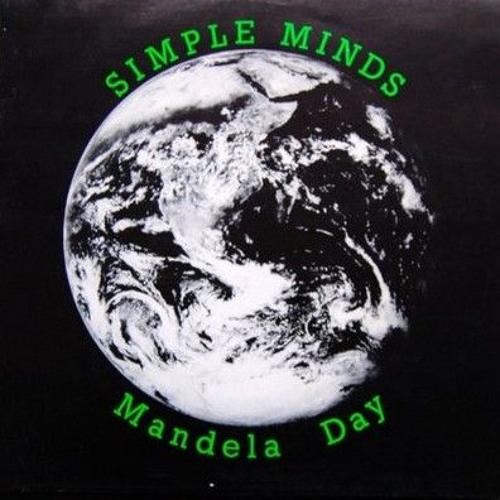
Simple Minds “Mandela Day” released

Mandela Day

Simple Minds

Writer(s): Jim Kerr, Charlie Burchill, Mick MacNeil (see lyrics here)


Released: February 6, 1989


First Charted: April 1, 1989


Peak: 17 MR, 12 AU, 1 DF (Click for codes to singles charts.)


Sales (in millions): -- US, -- UK, -- world (includes US + UK)


Airplay/Streaming (in millions): -- radio, 13.1 video, -- streaming

Awards:

Click on award for more details.

About the Song:

The Scottish rock band Simple Minds released their debut album, Life in a Day, in 1979. It wasn’t until their sixth album, 1982’s New Gold Dream, that they achieved top-10 status in the UK. They wouldn’t reach that benchmark for three more years in the United States. Hot on the heels of the #1 song “Don’t You Forget About Me” 1985’s Once Upon a Time was the band’s only gold-selling album in the U.S. and far exceeded the chart peak of anything else they released.

In the UK, the band continued to find success after 1985, notably achieving their fourth consecutive #1 album in 1989 with Street Fighting Years. The album was preceded by the Ballad of the Streets EP, which featured a cover of Peter Gabriel’s “Biko” alongside original songs “Mandela Day” and “Belfast Child.” It was the most successful of eight top-10 singles in the UK, going all the way to #1.

The trio of songs all made strong political statements. “Mandela Day” referenced South African activist Nelson Mandela, who was imprisoned in 1962 for his efforts in fighting against the racial segregation system known as apartheid in South Africa. He was finally freed in 1990 and became the country’s first president and black head of state from 1994 to 1999.

While he was still in prison in 1988, a concert celebration in honor of his 70th birthday was held at Wembeley Stadium in London on June 11. The concert, known as the Free Nelson Mandela Concert, was broadcast to 67 countries and an audience of 600 million. The bill included the Bee Gees, Tracy Chapman, Dire Straits, Eurythmics, Peter Gabriel, Whitney Houston, George Michael, Salt-N-Pepa, Simple Minds, Sting, UB40, and Stevie Wonder.

The Simple Minds’ set included familiar hits such as “Alive and Kicking,” “Sanctify Yourself,” and “Waterfront” as well as a cover of “Biko” alongside Peter Gabriel and Youssou N’Dour. They also premieried a new song known as “Mandela Day,” written specifically for the event. The song referenced Mandela’s quarter century in prison and celebrated the coming day when he would be free.


Resources:


Related Links:


First posted 9/3/2022.