


 | Twinkle Twinkle Little StarJane Taylor (lyrics), traditional (music) |
Writer(s): Jane Taylor (words), traditional (music) (see lyrics here) Published: 1806 First Charted: -- Peak: -- Sales (in millions): -- Airplay/Streaming (in millions): -- radio, 2143.66 video, 2143.66 streaming (multiple versions) |
Awards:Click on award for more details. 


|
|
| The Alphabet Song (ABC Song)Charles Bradlee (lyrics), traditional (music) |
Writer(s): unknown (words), traditional (music) (see lyrics here) First Published: 1824 Copyrighted: February 3, 1834 First Charted: -- Peak: -- Sales (in millions): -- Airplay/Streaming (in millions): -- radio, 1723.0 video, 75.18 streaming (multiple versions) |
Awards:Click on award for more details.
|
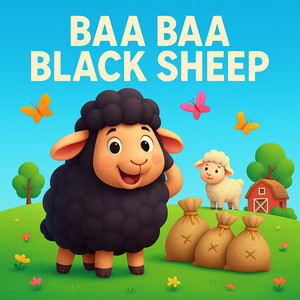 | Baa Baa Black Sheepunknown (lyrics), traditional (music) |
Writer(s): unknown (words), traditional (music) (see lyrics here) First Published: 1744 Copyrighted: October 25, 1879 First Charted: -- Peak: -- Sales (in millions): -- Airplay/Streaming (in millions): -- radio, 4364.72 video, 177.64 streaming (multiple versions) |
Awards:Click on award for more details.
|
About the Songs:Jane Taylor, an English poet, wrote a five-stanza poem called “The Star.” It was published in London in 1806 in Rhymes for the Nursery, a collection of poems Jane and her sister Ann. In 1838, it was published as the song “Twinkle, Twinkle Little Star” in The Singing Master: First Class Tune Book. WK Generally, people only sing the first stanza of the original poem. The song is now in the public domain. The poem was set to a French melody called “Ah! Vous diraj-je, Maman” (“Oh! Shall I tell you, Mama”), written by an unknown composer in 1761. It has been suggested it may even date back as far as 1740. The song, without words, first appeared in Les Amusements d’une Heure et Demy, a collection of music for garden parties published by a man named Boüin. There is, however, no evidence that he wrote the song. BR The original melody has often been misattributed to composer Wolfgang Amadeus Mozart. There’s even a myth that he wrote the tune as a child, but that isn’t true. BR He did, however, create a twelve-bar variation of the tune for solo piano in the early 1780s. Composers Haydn and Liszt have also integrated the piece into their works. Lewis Caroll created a parody of the tune in his 1865 novel Alice’s Adventures in Wonderland. The tune was also the basis for “The Alphabet Song (aka “The ABC Song),” published in the 1824 issue of “Musikalischer Haus-Frend”). It was copyrighted by Boston music publisher Charles Bradlee on February 3, 1834. WBM It has become the go-to song for teaching the alphabet to preschoolers in English-speaking countries. The melody was also used for “Baa Baa Black Sheep.” It was first printed as a nursery rhyme around 1744. In The Real Personages of Mother Goose, published in 1930, Katheine Elwes Thomas suggests the rhyme was a reference to heavy taxation on wool. WK2 It has also been suggested that the rhyme had a connection to the slave trade in the Southern United States, but there has been no evidence to support that. WK2 It wasn’t until 1879 that it was copyrighted after being set to music and appearing in Nursery Songs and Games. WBM The song has also played a significant role in music history. The German-born Emile Berliner invented a microphone in 1877 and sold the patent to Alexander Graham Bell. That same year, Thomas Edison invented the phonograph. Berliner would continue to develop technology to allow for recordings to be made and reproduced. He secured a licensing agreement with a German doll manufacturer called Kämmer & Reinhardt to mass produce discs to be played on a gramophone. The first known selections, believed to be of Berliner himself, featured recitations of “The Lord’s Prayer” and “Twinkle, Twinkle Little Star.” NRR The recordings have been inducted into the National Recording Registry. “Twinkle, Twinkle Little Star” has been used in studies to research child development in “vocal pitch accuracy, perception of intervals, contour and key, to grow self-esteem in the classroom, in music therapy for feeding and sleeping in premature infants, and as a method to encourage children to compose and improvise music.” RNZ Resources:
First posted 12/17/2023; last updated 11/30/2025. |


No comments:
Post a Comment